

Preface
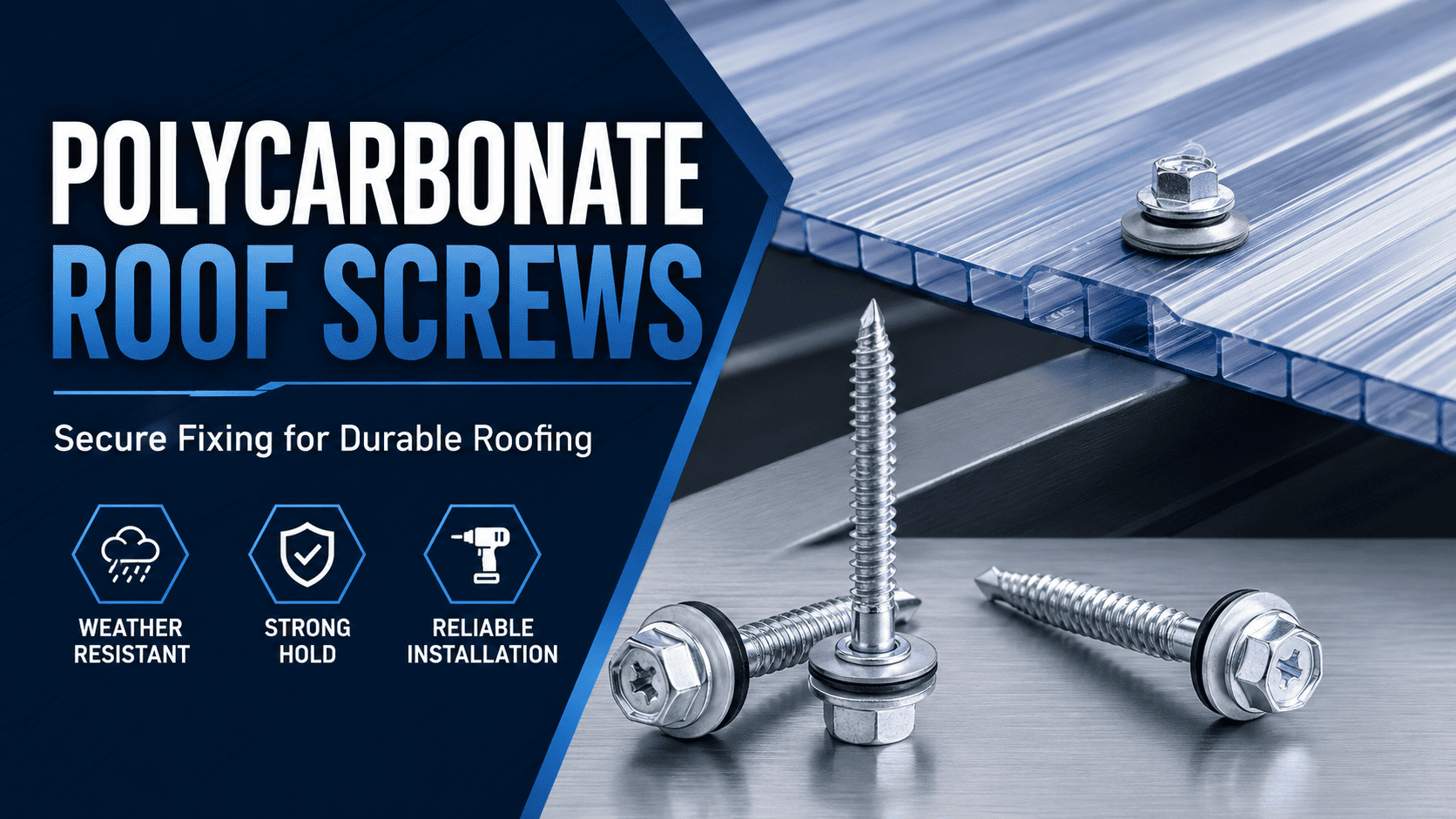
Polycarbonate roof screws are used to secure corrugated, multiwall, or solid polycarbonate sheets to steel, aluminum, or timber framing. Although the fastener may appear to be a small component, its material, washer design, drilling point, length, and installation torque directly affect roof stability and water resistance.
Polycarbonate sheets expand and contract with temperature changes. A screw that is installed too tightly may restrict movement and create cracking around the hole, while an under-tightened screw may allow vibration, leakage, or sheet movement during wind and rain.
The correct fastener should be selected according to sheet profile, support material, sheet thickness, expected wind load, exposure environment, and required service life. Fastener design should always be considered together with sheet manufacturer recommendations.
Contents
1. What Are Polycarbonate Roof Screws?
These fasteners are designed to hold polycarbonate roofing sheets to structural supports while maintaining sealing and allowing controlled sheet movement. Depending on the application, they may use self-drilling, self-tapping, or wood-thread points.
The fastener assembly may include a metal washer, bonded sealing washer, cap, spacer, or saddle washer. Each component helps distribute pressure and protect the sheet surface.
2. Which Screw Materials Are Available?
| Material | Main Characteristics | Typical Use |
|---|---|---|
| Carbon Steel | Good strength and economical cost | General roofing with suitable coating |
| Stainless Steel | Improved corrosion resistance | Coastal, humid, or demanding environments |
| Coated Steel | Protective finish with various performance levels | Outdoor construction and commercial roofing |
Material selection should consider not only rainfall but also salt exposure, industrial pollution, condensation, treated timber, and contact with dissimilar metals.
3. Why Are Washers Important?
A sealing washer helps close the penetration around the screw and reduces direct metal contact with the polycarbonate sheet. A larger washer can also spread clamping pressure over a wider area.
Bonded washers often combine a metal backing with an elastomer sealing layer. The elastomer should be compatible with outdoor exposure and should not become brittle too quickly under heat and ultraviolet radiation.
For profiled sheets, saddle washers may be used to match the sheet shape and reduce local deformation. Using a flat washer on an unsuitable profile may look acceptable on installation day but become less impressive after the first serious storm.
4. How to Select Screw Size
Screw length must account for sheet profile height, washer thickness, support material, and required thread engagement. A fastener that is too short may not achieve secure anchoring, while an excessively long screw may interfere with internal structures.
Diameter and thread design should match the support. Steel purlins require a drilling point and thread suited to the metal thickness, while timber framing requires sufficient wood-thread penetration.
The fixing pattern should follow engineering and sheet supplier guidance. Edge zones and corners may require closer fastener spacing because wind uplift is often more demanding in these areas.
5. Installation Mistakes to Avoid
Polycarbonate roof screws Over-tightening is one of the most common problems. The washer should create an effective seal without being compressed until it spreads excessively or distorts the sheet.
Holes may need to allow for thermal movement according to the sheet system. Drilling too close to the sheet edge can also increase the risk of cracking.
Installers should keep screws perpendicular to the support. Angled installation can create uneven washer contact, poor sealing, and reduced holding performance.
6. Corrosion and Outdoor Durability
Fastener corrosion may stain the roof, weaken the connection, and damage the sealing washer. Outdoor durability depends on base metal, coating thickness, installation damage, drainage, and environmental exposure.
Cut edges, damaged coatings, and metal swarf left on the roof can accelerate corrosion. Roofing surfaces should be cleaned after drilling and installation.
Periodic inspection should check loose fasteners, cracked washers, leakage marks, corrosion, and sheet movement before small defects become larger repairs.
7. How to Choose a Supplier
A reliable supplier should provide screw dimensions, material grade, coating information, drilling capacity, thread specifications, washer material, and recommended applications.
For custom projects, the supplier should also confirm head style, drive type, color matching, packaging, testing, and minimum order quantity.
Roof screws may be small, but they are responsible for holding a very large surface above people’s heads. Selecting them only by the lowest unit price is a remarkably creative way to make future maintenance more expensive.
Conclusion
Polycarbonate roof screws should be selected as part of the complete roofing system. Material, washer design, length, thread, corrosion resistance, fixing pattern, and installation torque all contribute to secure and watertight performance.
FAQ
Can ordinary screws be used for polycarbonate roofing?
Roofing fasteners should provide suitable holding power, sealing, corrosion resistance, and pressure distribution for the sheet system.
Why does polycarbonate crack around screws?
Common causes include over-tightening, insufficient movement allowance, poor hole placement, impact, or unsuitable washer design.
Which screw is best for coastal areas?
A corrosion-resistant fastener system should be selected according to the exact salt exposure, support material, and expected service life.