

Preface
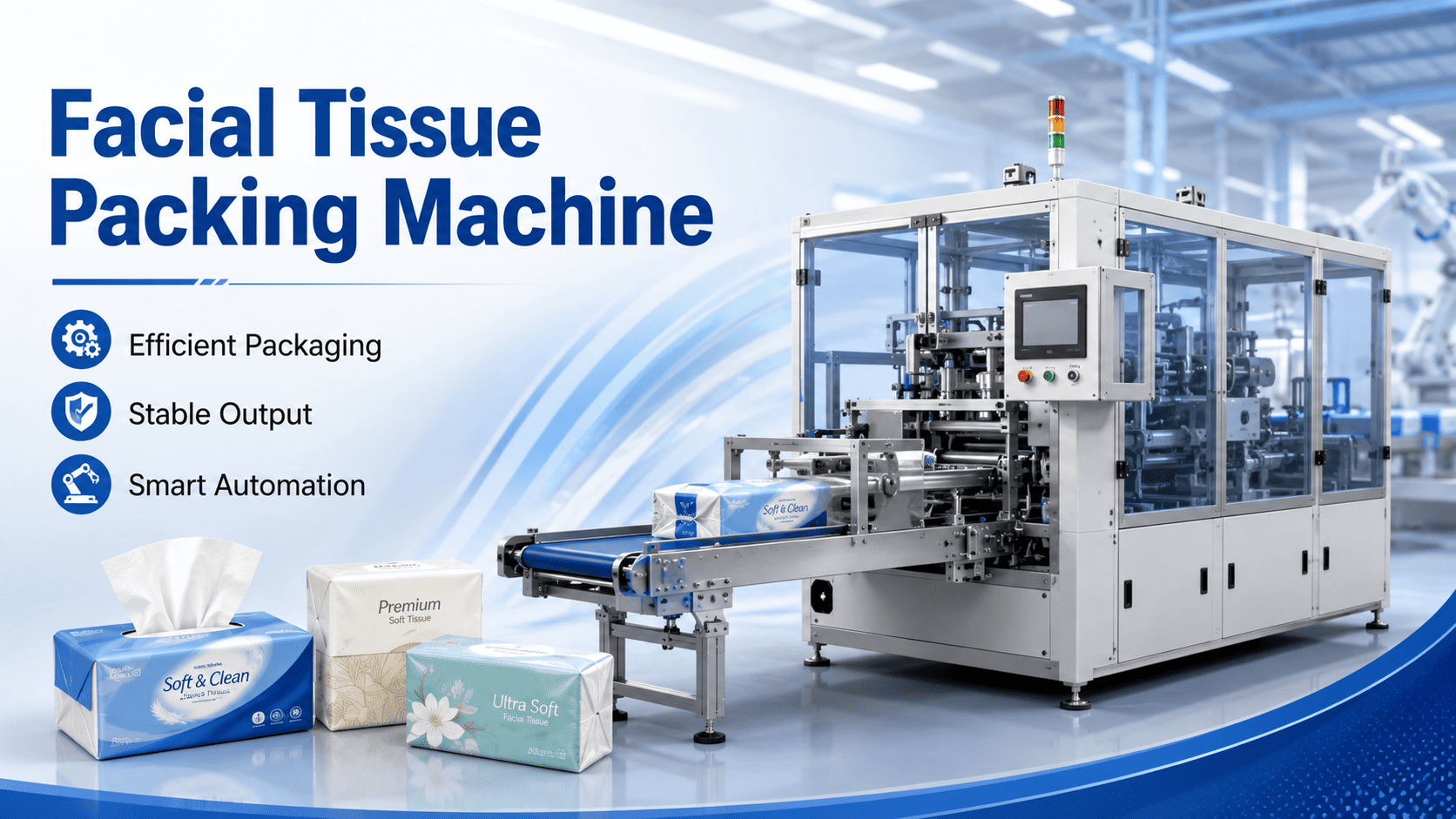
A facial tissue packing machine is used to wrap, seal, count, and prepare facial tissue products for retail or bulk packaging. It is commonly integrated with folding machines, log saws, conveyors, cartoners, bundlers, and case packing systems.
Selecting the right machine requires more than comparing packaging speed. Manufacturers should consider tissue dimensions, sheet count, pack style, film type, sealing method, automation level, changeover time, production stability, and future line expansion.
Contents
1. What Is a Facial Tissue Packing Machine?
The machine receives folded tissue stacks, positions the product, forms the wrapping film or bag, seals the package, and transfers the finished pack to downstream equipment.
Depending on the line design, the machine may also include automatic feeding, film tracking, date coding, perforation, opening labels, pack counting, inspection, rejection, and bundle packing.
Automatic systems improve packaging consistency, reduce labor, and support stable output during continuous production.
2. Common Machine Types
Soft-pack facial tissue machines use flexible film to wrap tissue stacks. They are commonly used for household facial tissues and portable packs.
Box tissue packing lines place tissue stacks into paper cartons and may include carton forming, insertion, closing, and coding functions.
Bundle packing machines combine several individual packs into larger transport or promotional bundles.
3. Product and Film Requirements
Manufacturers should confirm tissue width, length, folded height, sheet count, stack compression, pack dimensions, and acceptable appearance tolerance.
Film specifications include material type, thickness, roll width, roll diameter, print registration, friction, sealing temperature, and barrier requirements.
Poorly matched film may create wrinkles, weak seals, print misalignment, unstable feeding, or excessive waste.
4. Key Technical Specifications
| Specification | Evaluation Point |
|---|---|
| Packing Speed | Must match upstream tissue output and downstream handling |
| Pack Size Range | Confirm supported width, length, height, and sheet count |
| Changeover | Important for factories producing multiple pack formats |
| Control System | PLC, HMI, alarms, recipe storage, and production data |
5. Production Line Integration
Facial tissue packing machine the packing machine should communicate with folding, cutting, conveying, cartoning, bundling, and case packing equipment.
Buffer sections and speed synchronization help reduce product jams when upstream and downstream equipment operate at different rates.
Factories planning future automation should reserve interfaces for inspection systems, coding, data collection, and robotic case packing.
6. Maintenance and Troubleshooting
Daily inspection should cover sealing jaws, film rollers, sensors, conveyors, belts, cutters, pneumatic components, guards, and safety devices.
Wrinkled packs may result from incorrect film tension, product positioning, temperature settings, or conveyor timing.
Spare parts such as heaters, thermocouples, belts, sensors, blades, bearings, and pneumatic seals should be prepared according to production criticality.
7. How to Choose a Supplier
A suitable supplier should test real tissue samples and packaging film before confirming machine specifications.
Review machine structure, control components, safety design, documentation, training, installation support, warranty, remote service, and spare parts availability.
The fastest machine on paper is not always the most productive machine in the factory. Stable operation, quick changeover, and responsive technical support often create greater long-term value.
Conclusion
Selecting a facial tissue packing machine requires a complete review of tissue format, film, speed, automation, line integration, maintenance, and service support.
FAQ
Can one machine pack different tissue sizes?
Yes, if the machine range and change parts support the required pack dimensions.
What causes weak package seals?
Possible causes include incorrect temperature, pressure, dwell time, film material, or contaminated sealing surfaces.
How should a supplier be selected?
Compare sample testing, machine stability, spare parts, technical support, warranty, and line integration experience.