

Preface
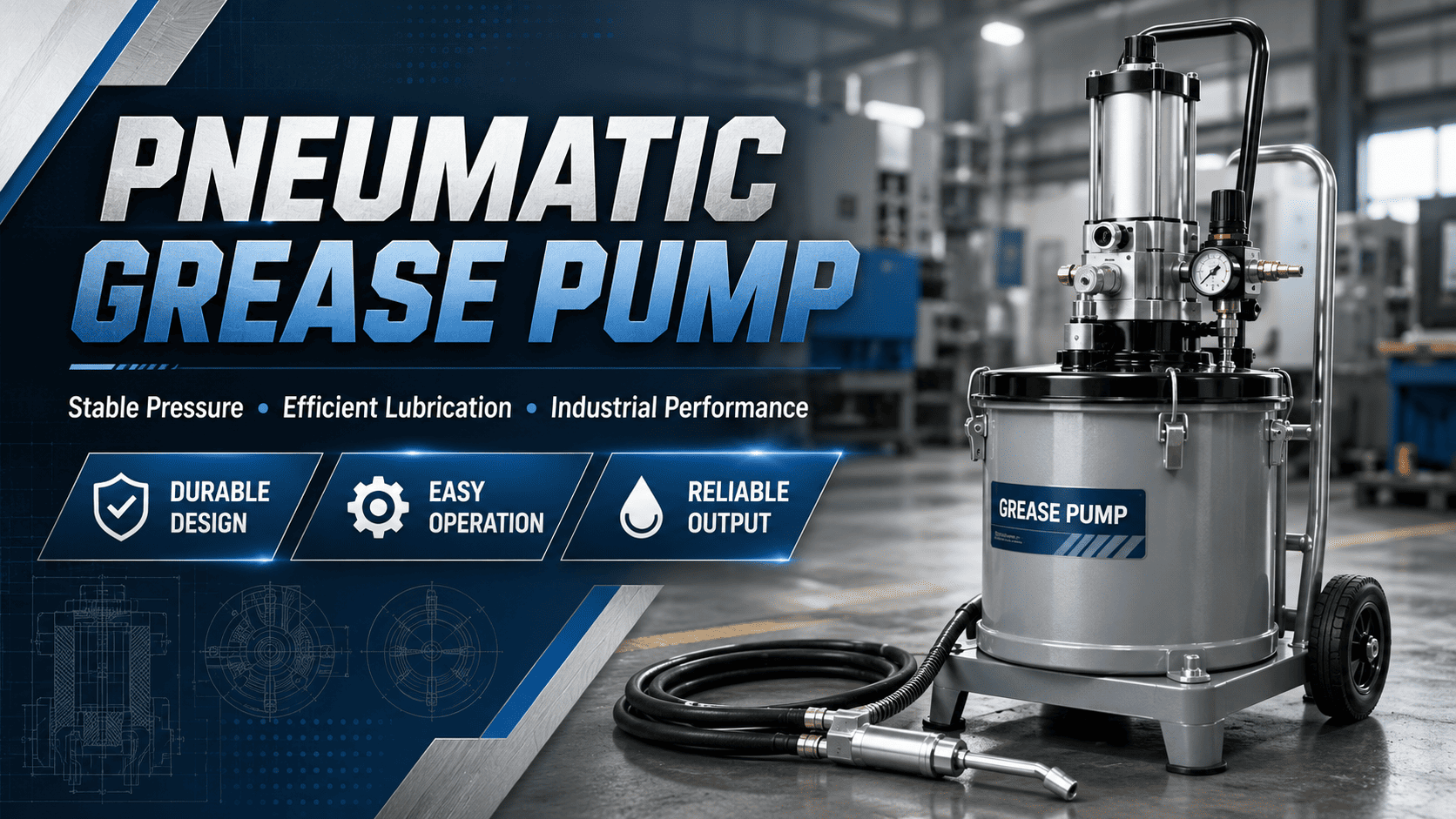
A pneumatic grease pump is widely used in automotive workshops, machinery maintenance, manufacturing plants, construction equipment service, and industrial lubrication systems. It uses compressed air to drive grease delivery, helping operators apply grease more consistently and efficiently than manual lubrication methods.
Choosing the right pneumatic grease pump is not only about maximum pressure. Buyers should consider grease viscosity, pressure ratio, output volume, drum size, hose length, working distance, air supply quality, spare parts availability, and long-term maintenance requirements.
For reliable long-term operation, the selected model should also match the available air supply, lubrication frequency, hose layout, operating temperature, and access to replacement seals, regulators, grease guns, and other wearing parts.
Contents
1. What Is a Pneumatic Grease Pump?
A pneumatic grease pump converts compressed air into mechanical pumping force. The pump draws grease from a drum or container and delivers it through a hose and grease gun to lubrication points.
Compared with manual grease guns, pneumatic pumps provide faster delivery, more consistent pressure, and lower operator fatigue. They are especially useful when many lubrication points must be serviced every day.
The system commonly includes an air motor, pump tube, follower plate, drum cover, air regulator, hose, swivel, grease gun, and optional hose reel.
2. Common Applications
Automotive workshops use pneumatic grease pumps for chassis components, bearings, suspension parts, universal joints, and commercial vehicle maintenance.
Manufacturing plants use them for machinery bearings, conveyors, presses, gear systems, and preventive maintenance programs.
Construction and agricultural equipment require high-pressure grease delivery for excavators, loaders, tractors, cranes, and other heavy machinery.
Centralized or multi-point lubrication systems may use pneumatic pumps to supply grease through distribution lines to several service points.
3. Key Specifications
| Specification | Why It Matters |
|---|---|
| Pressure Ratio | Determines grease delivery pressure relative to air inlet pressure |
| Output Volume | Affects delivery speed and suitability for frequent lubrication |
| Grease Compatibility | The pump must match grease viscosity and NLGI grade |
| Drum Size | Pump tube and accessories must fit the grease container |
| Air Consumption | Must match compressor capacity and operating pressure |
4. How to Select the Right Model
Start by identifying the grease grade and working temperature. Cold or highly viscous grease requires more pumping force and may reduce output.
Long hoses, narrow fittings, multiple swivels, and remote lubrication points create pressure loss. The pump must provide enough pressure at the final outlet, not only at the pump body.
High-volume service facilities may require a larger drum, higher output, hose reels, or a fixed distribution system. Occasional maintenance may only require a portable pump set.
Verify compressor pressure, air flow, filtration, moisture control, and connection size before selecting the pump.
5. Installation and Operation
Install an air filter and regulator to provide clean, controlled compressed air. Excessive inlet pressure can accelerate wear or damage seals.
The pump should be securely mounted on the correct drum cover or cart. A follower plate helps reduce air pockets and keeps grease feeding toward the pump inlet.
Before operation, prime the pump and remove trapped air from the grease line. Air pockets may cause irregular delivery and pressure fluctuations.
Operators should release system pressure before servicing hoses, guns, fittings, or the pump assembly.
6. Maintenance and Troubleshooting
Regularly inspect the air regulator, hose, swivel, grease gun, seals, fittings, and pump tube for leakage or wear.
If the pump cycles but does not deliver grease, check the drum level, follower plate, air pockets, clogged inlet, damaged seals, or excessively cold grease.
Low output may be caused by insufficient air pressure, restricted hoses, worn seals, blocked fittings, or grease viscosity that exceeds pump capability.
Use compatible replacement parts and follow the manufacturer’s lubrication and service intervals to reduce downtime.
7. Supplier Selection
Choose a supplier that can confirm grease compatibility, pressure requirements, drum dimensions, air consumption, hose length, and accessory configuration.
Spare seals, repair kits, grease guns, swivels, regulators, hoses, follower plates, and replacement pump parts should be readily available.
Technical documentation should include operating pressure, pressure ratio, output, connection size, compatible grease grades, installation instructions, and maintenance procedures.
For OEM or industrial projects, the supplier should also support customization, testing, packaging, and long-term parts supply.
Conclusion
Selecting a pneumatic grease pump requires a complete review of grease viscosity, pressure ratio, output, drum size, air supply, hose length, service frequency, and spare parts support.
A properly matched pump improves lubrication efficiency and reduces operator workload. A pump selected only by maximum pressure may create unstable output, unnecessary wear, or disappointing field performance.
FAQ
What is a pneumatic grease pump?
It is a grease delivery pump powered by compressed air for workshop and industrial lubrication.
What pressure ratio should I choose?
The required ratio depends on grease viscosity, hose length, fittings, working distance, and lubrication-point resistance.
Can one pump handle all grease grades?
No. The pump must be checked against the grease NLGI grade, temperature, and delivery conditions.
Why does the pump run without delivering grease?
Possible causes include an empty drum, trapped air, a blocked inlet, cold grease, or damaged seals.
Is an air regulator necessary?
Yes. It controls inlet pressure and helps protect the pump from excessive air pressure.
How do I choose a supplier?
Compare technical support, grease compatibility, accessories, spare parts, documentation, warranty, and customization capability.