

How to Choose a Heavy Duty Door? A Summary of Industrial Door Types, Durable Materials, and Application Areas
Heavy duty doors are designed for industrial, commercial, and high-traffic environments where standard doors may not provide enough strength, durability, security, or long-term performance. They are commonly used in factories, warehouses, logistics centers, commercial buildings, cleanrooms, and back-of-house areas that require stronger structural protection.
Choosing the right heavy duty door requires more than selecting a large or thick door panel. Buyers should consider material strength, opening size, traffic frequency, fire rating, security needs, insulation, hardware quality, installation conditions, and long-term maintenance.
Section One: What Is a Heavy Duty Door?
A heavy duty door is a reinforced door system designed to withstand frequent use, impact, harsh environments, and higher security demands. Compared with a standard door, it usually uses stronger materials, thicker panels, reinforced frames, durable hinges, and industrial-grade hardware.
Standard doors are often suitable for light residential or office use, while heavy duty doors are built for locations with forklifts, carts, machinery, goods movement, or controlled access. Industrial sites need stronger doors because doors are not only entry points but also part of safety, workflow, and facility protection.
Common facilities using heavy duty doors include warehouses, manufacturing plants, loading areas, cold storage facilities, commercial kitchens, utility rooms, back-of-house corridors, cleanrooms, and security-sensitive zones.
| Type | Typical Use | Main Strength | Selection Note |
|---|---|---|---|
| Steel door | Warehouses, factories, service areas | Strong impact resistance | Check frame and hardware quality |
| Fire-rated door | Safety zones, corridors, exits | Fire compartmentation support | Certification and compatible hardware matter |
| Sliding / rolling door | Large openings, loading areas | Saves swing space | Track system and opening conditions matter |
| Hinged commercial door | Utility rooms, back-of-house areas | Simple daily operation | Match traffic frequency and durability needs |
Section Two: Common Types of Heavy Duty Doors
Heavy duty steel doors are one of the most common options. They offer strong impact resistance, security, and long-term durability, making them suitable for factories, mechanical rooms, warehouses, and commercial buildings.
Fire-rated industrial doors are used in areas that require fire compartmentation and safety compliance. These doors must meet specific fire-rating requirements and should be installed with compatible frames, hardware, and seals.
Sliding and rolling doors are suitable for large openings, loading areas, logistics centers, and spaces where swing clearance is limited. Hinged commercial doors are commonly used for utility rooms, service entrances, back-of-house areas, and high-traffic commercial zones.
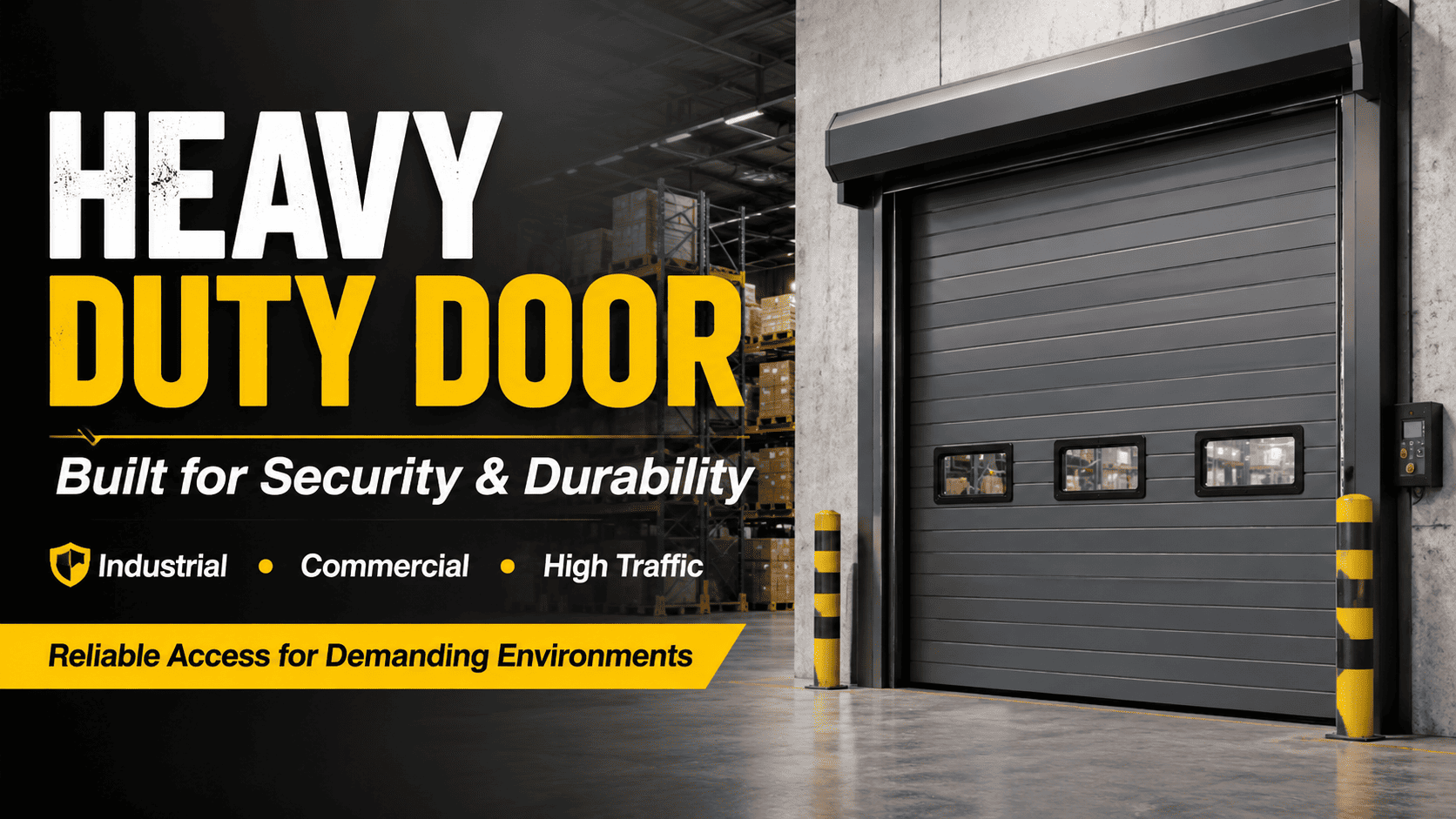
Section Three: Where Are Heavy Duty Doors Used?
Warehouses and logistics centers often require heavy duty doors for loading docks, storage areas, vehicle access zones, and internal partitions. These doors must handle frequent traffic and potential impact from equipment.
Factories and manufacturing plants use heavy duty doors to separate production areas, protect machinery, control access, and improve safety. In commercial buildings, they are often installed in service corridors, emergency exits, delivery zones, kitchens, and mechanical rooms.
Cleanrooms and controlled environments may require doors with better sealing, smooth surfaces, chemical resistance, and compatibility with hygiene or pressure-control requirements. In these cases, door material and sealing design become especially important.
Section Four: How to Choose a Heavy Duty Door
Material and thickness selection should depend on the application. Steel doors are common for strength and security, while stainless steel may be preferred for food processing, cleanrooms, or corrosive environments.
Impact resistance and durability are important in areas with forklifts, carts, trolleys, or frequent movement. Security and access control should also be considered, especially for warehouses, restricted areas, or commercial facilities with valuable assets.
Insulation and weather resistance matter when doors are installed outdoors, in cold storage, or between temperature-controlled areas. A proper door system should match the facility’s environmental needs.
Section Five: Installation Considerations
Opening size and structural conditions must be checked before installation. The wall, frame, floor level, and surrounding structure should support the weight and movement of the door.
Hardware and hinge selection affect long-term performance. Heavy duty hinges, closers, locks, handles, rollers, and tracks should match the door weight and usage frequency.
Safety compliance and fire rating must be confirmed where required. Maintenance access planning is also important because large industrial doors need regular inspection, adjustment, and repair.
Section Six: Cost Factors
Door size and material are major cost factors. Larger doors, thicker panels, stainless steel, fire-rated construction, and specialized finishes usually increase the price.
Custom design requirements such as special dimensions, windows, louvers, insulation, access control, seals, or cleanroom specifications also affect cost. Installation complexity can increase when openings require structural adjustment, welding, framing, or special equipment.
Long-term maintenance costs should also be included. A cheaper door may cost more over time if hardware wears quickly or if replacement parts are difficult to obtain.
Section Seven: Industry Trends
Automated heavy duty doors are increasingly used in logistics, factories, and controlled environments to improve workflow and reduce manual operation.
Smart access systems are also becoming common, including card readers, biometric control, sensors, remote monitoring, and integration with building management systems. Energy-efficient door solutions are growing in demand, especially for cold storage, cleanrooms, and buildings focused on energy savings.
Future industrial door development will likely focus on automation, safety, durability, data integration, and better environmental performance.
Conclusion
Heavy duty doors are essential for industrial, commercial, and high-security environments. Selecting the right door requires considering material strength, safety requirements, installation conditions, traffic frequency, access control, and long-term maintenance needs.
A suitable heavy duty door should not only protect the facility but also support daily operations, improve safety, and reduce long-term repair risks.
FAQ
What is a heavy duty door?
A heavy duty door is a reinforced door system designed for high-traffic, industrial, commercial, or security-sensitive environments.
Where are heavy duty doors commonly used?
They are commonly used in warehouses, factories, logistics centers, commercial buildings, cleanrooms, and back-of-house areas.
What materials are suitable for heavy duty doors?
Common materials include steel, stainless steel, reinforced metal panels, insulated panels, and fire-rated materials.
Are heavy duty doors fire-rated?
Some heavy duty doors are fire-rated, but fire rating depends on door construction, frame, hardware, and certification.
How much does a heavy duty door cost?
Cost depends on size, material, fire rating, hardware, custom design, installation complexity, and maintenance requirements.
How do I choose a heavy duty door supplier?
Choose a supplier with industrial door experience, material knowledge, installation capability, safety compliance support, and after-sales service.